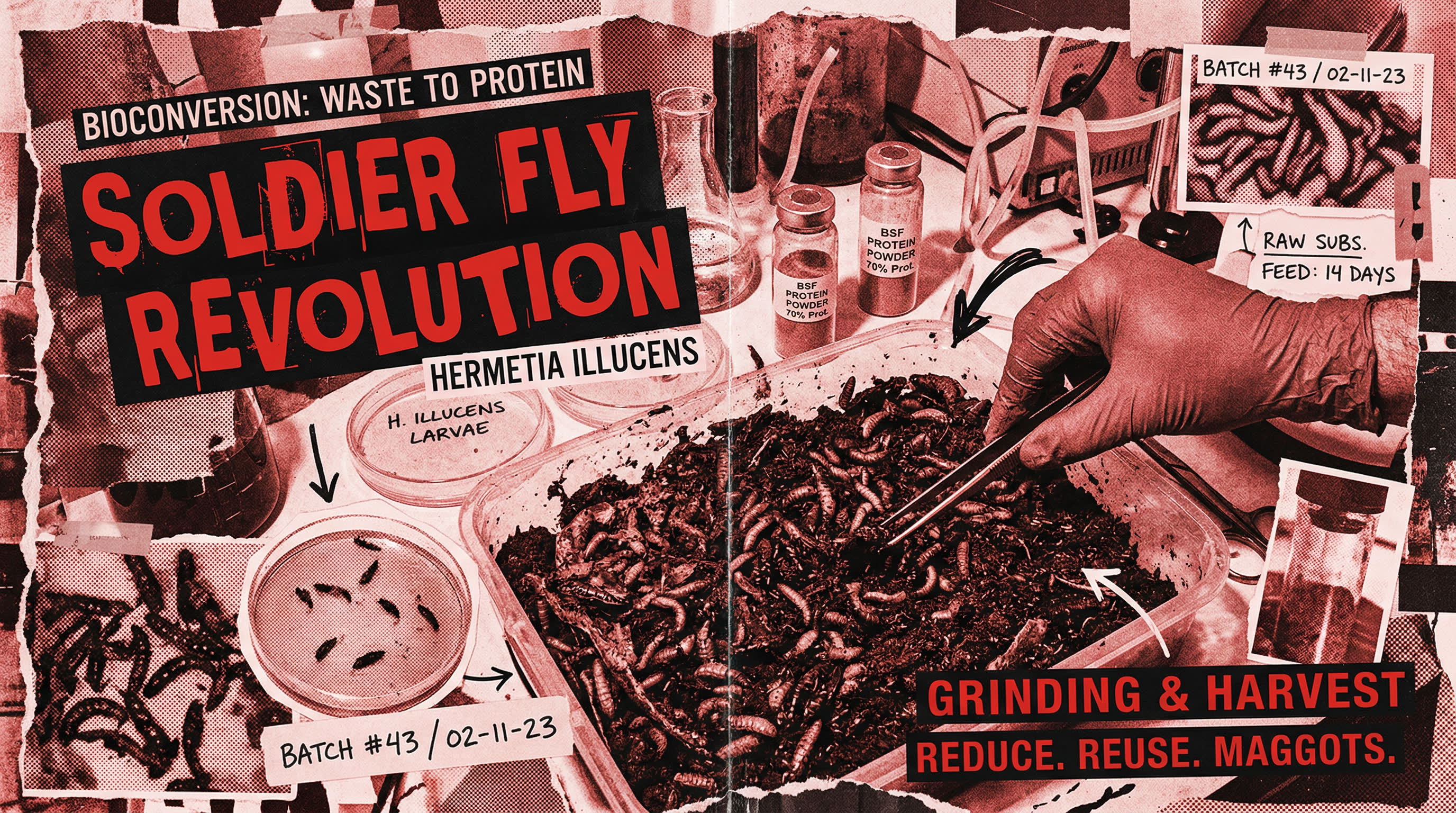
1. Origins and Biology
Hermetia illucens — a species of Diptera from the soldier fly family (Stratiomyidae), which over the past two decades has transformed from an obscure entomological subject into one of the most promising bioeconomy tools on the planet. To understand why this species has taken center stage in the alternative protein industry, let us begin with its systematics, evolutionary history, and unique biology.
Taxonomy
The species was first scientifically described by Carl Linnaeus in 1758 in the 10th edition of Systema Naturae under the original name Musca illucens. In 1805, French zoologist Pierre Andre Latreille transferred it to a separate genus Hermetia, establishing the current name. The specific epithet illucens derives from the Latin for "illuminating" — "shining" — and refers to the characteristic transparent "windows" on the first abdominal segment of the adult insect, which create the impression of glowing.
Origin and Dispersal
Hermetia illucens originates from the Neotropical zoogeographic region: the species originally inhabited Central and South America, presumably in the territory of modern Mexico and further south. Widespread global dispersal occurred as a result of trade globalization: by 1960 the species had established itself across most of its current range, accidentally traveling with agricultural cargo, military equipment, and international shipments.
Today the species is cosmopolitan: found on all continents except Antarctica. In Europe it has been recorded on the Iberian Peninsula, southern France, Italy, Croatia, Malta, Switzerland, as well as on the Black Sea coast of Russia (Krasnodar Krai).
Evolutionary History and Domestication
Genomic studies have revealed the existence of at least two genetic lineages of H. illucens, which diverged more than 3 million years ago — by some estimates, the divergence reaches 6.8 million years, exceeding the divergence between species of the genus Drosophila.
Why is the comparison with Drosophila important?
Most industrial and laboratory populations worldwide descend from a colony established in Georgia (USA) in the 1990s by scientist Craig Sheppard with an effective population size of approximately 20,000 individuals. This lineage, known as the "Sheppard strain," was distributed to research laboratories around the world.
Despite the relatively young age of industrial rearing (mass production began only 2–3 decades ago), clear "domestication signatures" have already been detected in the genome of commercial populations — positive selection at five key genetic loci on chromosomes 2, 4, and 5, associated with development, behavior, reproduction, metabolism, and immunity.
Life Cycle
Complete metamorphosis (holometaboly) proceeds through 5 stages: egg → neonate → larva (6 instars) → prepupa → pupa → imago.
Unique Biological Properties
It is precisely this set of unique properties that makes BSF an attractive candidate for industrial use:
- Self-harvest: prepupae instinctively leave the substrate and migrate upward along inclined surfaces, enabling collection without manual labor.
- Negative phototaxis: larvae avoid light, which is used to control their movement in industrial facilities.
- Displacement of synanthropic flies: H. illucens competes with the house fly (Musca domestica), reducing its population by 94–100% in shared habitats.
- Species mimic: the adult imitates the appearance of mud dauber wasps (Sceliphron spp.), including the "wasp waist" shape, elongated antennae, and pale hind legs.
- Do not transmit diseases: adults do not bite, do not sting, and are not vectors of zoonotic diseases.
- Pathogen reduction: when larvae are added to chicken manure, levels of E. coli O157:H7 and Salmonella enterica are significantly reduced.
2. Names in Different Countries
The Black Soldier Fly is one of the few insect species that has established common names in virtually all major world languages. This reflects the global scale of interest in the species: from European research laboratories to Southeast Asian farms. Below are the most common names with transcriptions and commentary.
| Language | Name | Transcription / Comment |
|---|---|---|
| Latin (scientific) | Hermetia illucens | Linnaeus, 1758 |
| English | Black Soldier Fly (BSF) | Common abbreviation — BSF |
| Russian | Chyornaya lvinka | Also: amerikanskaya vodyanaya lvinka (closer to systematics) |
| Chinese | 黑水虻 | Pinyin: hēi shuǐ máng — "black water fly"; also 亮斑扁角水虻 |
| Japanese | アメリカミズアブ | Amerika Mizu Abu; also ブラックソルジャーフライ |
| Korean | 동애등에 | Dongae Deung-e; transliteration: 블랙솔져플라이 |
| Thai | หนอนทหารดำ | Nawn Tahan Dam — "black soldier larva" |
| Indonesian | Lalat Tentara Hitam | Direct translation from English; also BSF |
| French | Mouche soldat noire | "Black soldier fly" |
| Spanish | Mosca soldado negra | |
| German | Schwarze Soldatenfliege | German Waffenfliegen = "weapon flies" — for the family Stratiomyidae |
Interestingly, in Japan the old colloquial name — 便所バチ (benjo-bachi, "toilet wasp") — has a negative connotation, so in professional circles only the scientific name アメリカミズアブ or the English transliteration is used. The Chinese pronunciation of 黑水虻 — the character "虻" (máng) is read with the fourth tone.
Why does the Chinese name mean "black water fly"?
3. Organic Waste Processing
The ability of BSF larvae to process organic waste is the foundation of the entire Black Soldier Fly industry. It is this aspect that makes BSF not merely a protein source, but a key element of the circular economy.
BSF Processing Efficiency
BSF larvae can reduce organic waste biomass by 50–83% depending on the substrate. They process a broad range of organic matter: kitchen waste, fish processing waste, brewer's spent grain, fruit and vegetable residues, agricultural by-products, and even fecal sludge. The full processing cycle takes only 8–11 days — 3–4 times faster than conventional composting. According to researchers, BSF could potentially process 1.3 billion metric tons of the world's biowaste annually.
⚠️ Important limitations of industrial bioconversion
"Food loss and waste generates 8–10% of global greenhouse gas emissions — nearly 5 times more than the entire global aviation industry."
Why process organic waste?
Global Food Waste Statistics
In 2022, humanity discarded 1.05 billion metric tons of food at the retail, food service, and household levels — accounting for 19% of all food produced for consumers. Of this volume, 60% comes from households (631 million metric tons). On average, every person on the planet discards 79 kg of food per year.
Beyond Waste: Novel Protein Production
Waste processing is only one aspect of the BSF industry. When nutrient-rich by-products — brewer's spent grain, whey, fruit processing waste — are used as substrate, combined with laboratory-level colony control (genetics, sanitation, substrate standardization), the result is a high-quality novel protein with a controlled amino acid and fatty acid profile.
The rationale for producing such protein is that it can replace fishmeal and soybean meal — the two largest feed protein sources, both of which are under pressure (a fishmeal deficit is projected from 2028 onward, while soy is constrained by arable land). BSF protein is produced from renewable feedstock, requires no arable land, and has a minimal carbon footprint.
Situation in Russia
Approximately 17 million metric tons of food is discarded in Russia annually (≈1/3 of all food produced). Meanwhile, 94% of food waste ends up in landfills. Each year, 15–20 million metric tons of organic waste from agriculture alone goes to dumps. In Russia, food waste is responsible for 2.4 million metric tons of methane emissions annually. In 2019, only 7% of municipal solid waste was recycled; approximately 93% was sent to landfills.
BSF Processing vs Landfill
| Parameter | Landfill Disposal | BSF Processing |
|---|---|---|
| GHG Emissions | High (methane, NH₃, H₂S) | Significantly lower; no anaerobic decomposition |
| Biomass Reduction | 0% | 50–83% |
| Nitrogen Utilization | Losses to soil/air | Fixed in larvae and frass |
| End Product | Soil and water contamination | Protein + fat + biofertilizer |
| Odor | High | Reduced by larvae (aeration, substrate drying) |
4. Industry and Investments
Over the past decade, the Black Soldier Fly industry has transformed from a niche scientific experiment into a full-fledged alternative protein sector with cumulative investments exceeding $2 billion. The world's largest agricultural corporations — Tyson Foods, ADM, Cargill, Bunge — have entered the sector, underscoring the strategic significance of BSF technologies.
Key Industry Players
| Company | Country | Founded | Investment | Key Partners |
|---|---|---|---|---|
| InnovaFeed | France | 2016 | $450–482 M | ADM, Cargill, QIA, Temasek |
| Protix | Netherlands | 2009 | €55 M (2023 round) | Tyson Foods, Rabo Investments |
| Enterra Feed | Canada | — | >$100 M (estimated) | Cibus Fund / ADM Capital, PHW |
| EnviroFlight | USA | — | Undisclosed | Leader in AAFCO approvals |
| Nutrition Technologies | Singapore/Malaysia | 2015 | $28 M | Bunge, Sumitomo Corp., PTT Ventures |
| Entobel | Singapore/Vietnam | 2013 | $33 M (Series B) | Mekong Capital, IFC — largest in Asia, 10,000 t/year |
| Beta Bugs | Scotland | 2017 | £3.8 M | Tricapital Angels, Scottish Enterprise |
| Hexafly | Ireland | — | €1.1 M | SOSV IndiBio |
| GreenGrahi | India | — | $3.73 M (seed, 2025) | Avaana Capital |
| Company | Country | Investment | Status |
|---|---|---|---|
| AgriProtein / ITG | South Africa / UK | $105 M (2018) | Liquidated |
| ENORM Biofactory | Denmark | €50 M (2022) | Bankruptcy, October 2025 |
Key Deal Details
InnovaFeed is the global leader by scale. The plant in Nesle, France is the world's largest vertical insect farm with a capacity of 15,000 t/year. Series D in September 2022 raised $250 M, led by Qatar Investment Authority (QIA) with participation from ADM, Cargill, and Temasek. A joint plant with ADM is being built in Decatur (Illinois, USA); a 10-year global partnership agreement has been signed with Cargill. In November 2024, a USDA grant of $11.8 M was received.
Protix is the world's first commercial insectarium, opened in 2019. In 2023, Tyson Foods acquired a minority stake, and the partnership includes the construction of a joint plant in the USA with a capacity of 70,000 t of live larvae per year, processing 250,000 metric tons of food waste. Protix's revenue target is approximately €1 B by 2035.
Nutrition Technologies (Singapore) maintains approximately 3 billion larvae at its production facility at any given time. A partnership with Sumitomo Corp. provides for the import of 30,000 t of fish feed by 2030.
Entobel (Singapore/Vietnam) operates the largest BSF plant in Asia with a capacity of 10,000 t/year. It positions itself as "the most CAPEX-efficient BSF plant in the world." The company raised $33 M in a Series B round with participation from Mekong Capital and IFC (World Bank).
The bankruptcy of ENORM Biofactory (Denmark) in October 2025 is a classic example of industry risks. The company raised €50 M, built the largest insect plant in Northern Europe (22,000 m², 10,000+ t of meal/year), but failed to achieve operational profitability.
Strategic Investors
| Corporation | Investment Target | Type of Involvement |
|---|---|---|
| Tyson Foods (USA) | Protix | Minority stake + JV plant in the USA |
| ADM (USA) | InnovaFeed | Partnership + Series D; plant in Illinois |
| Cargill (USA) | InnovaFeed | 10-year partnership agreement + Series D |
| Qatar Investment Authority | InnovaFeed | Lead Series D ($250 M) |
| Temasek (Singapore) | InnovaFeed | Participation in Private Equity and Series D |
| Sumitomo Corp. (Japan) | Nutrition Technologies | Import of 30,000 t of feed by 2030 |
| Bunge (USA) | Nutrition Technologies | JV for expansion in Southeast Asia |
5. Processing Technologies
Industrial processing of BSF larvae involves several sequential stages — from rearing in the insectarium to obtaining finished meal and fat. The two main extraction methods — dry (DRY) and wet (WET) — differ in energy intensity, product yield, and quality of the final ingredients.
Stage 1: Breeding (Insectarium)
The production cycle begins with the mating zone: adult flies are placed in specialized chambers with illumination of 600–2,000 lux (BSF mates in flight under direct light), temperature of 24–32°C, and humidity of 60–80%. Females lay 200–620 eggs in wooden egg traps or corrugated cardboard near fresh substrate. After 3–4 days of incubation at 28–30°C, neonates are transferred to the substrate, where larvae grow for 7–15 days at an optimal temperature of 28–32°C. Substrate moisture is maintained at 60–70% with daily feed portions.
Stage 2: Harvesting and Separation
In the prepupal stage, larvae self-migrate from the substrate upward along inclined trays — a unique "self-harvesting" mechanism. Separation is performed using vibrating screens and/or air separation: larvae proceed to the processing line, while frass is dried and shipped as biofertilizer. Before processing, larvae are washed in a rinsing bath to remove substrate residues.
DRY Method (Dry Pressing)
- Inactivation (killing): blanching in water at 90°C for 40–60 seconds or freezing at −20°C.
- Drying: belt or drum dryers; temperature 60–80°C; moisture reduction to ≤10%.
- Cold pressing: the dried mass is pressed using a screw or hydraulic press — fat is separated (fat yield 15–25% of raw material mass).
- Grinding: the defatted cake is ground into meal with a particle size of <500 μm.
- Packaging: BSF meal is ready for sale.
Product characteristics under the dry method: crude protein 55–60% on a dry matter basis, fat 8–14% after defatting, chitin ~6–7%.
WET Method (Wet Pressing)
- Blanching: immersion in hot water (90°C, 5 min) — inactivation and reduction of microbial load.
- Wet pressing: fresh or blanched larvae are pressed using a screw press without prior drying → "juice" + fibrous residue.
- Phase separation: centrifugation of the "juice" at 4,000–8,000 g into 4 fractions:
- Fat layer (top) — pure lipid fraction
- Cream layer — fat-protein emulsion
- Supernatant — soluble proteins
- Sediment — insoluble proteins + chitin
- Drying of fat and protein fractions separately.
DRY vs WET Comparison
| Criterion | DRY Method | WET Method |
|---|---|---|
| Energy Intensity | High (large drying volume) | Moderate (smaller drying volume) |
| Fat yield | ~15–25% | ~25–35% |
| Fat Quality | More oxidized | Fresher, less thermal damage |
| Protein Quality | High denaturation | Partial; hydrolysate possible |
| Scale | Simple for small/medium plants | Advantageous at large scale |
| CAPEX | $0.5–2 M (1–5 kt/year) | $2–10 M (5–15 kt/year) + centrifuges, separators |
| Protein Yield in Meal | ~55–60% | ~50–65% (depends on fraction) |
CAPEX Benchmarks for Large Plants
Key finding: with the wet method without blanching, 92% of fat transfers into the "juice"; the fat is less oxidized, but the product is prone to browning due to polyphenol oxidase reaction. With blanching, protein denaturation occurs and fat is trapped in the protein matrix — up to 25% fat yield loss, but a clean lipid fraction is obtained. Additional enzymatic treatment (proteases, Alcalase) can release fat from the denatured protein matrix.
6. Composition and Analysis
The nutritional composition of BSF larvae is one of the main reasons they have become the leading candidate for replacing fishmeal and soybean meal in the global feed industry. Below are research results based on a body of scientific publications.
Proximate Composition: BSF vs Fishmeal vs Soybean Meal
| Parameter (g/kg DM) | BSF (full-fat) | BSF (defatted) | Fishmeal | Soybean meal |
|---|---|---|---|---|
| Crude Protein | ~415 (216–655) | ~554 | ~675 | ~494 |
| Crude fat | ~353 (294–515) | ~69 | ~104 | ~14 |
| Crude Fiber | ~95 (41–213) | — | ~3 | ~74 |
| Ash | ~82 (27–132) | ~93 | ~172 | ~72 |
| Chitin | ~62 (39–72) | — | — | — |
Amino Acid Profile
The BSF amino acid profile is a key indicator of feed value. Below is a visual comparison with the two main competitors — soybean meal and fishmeal (essential amino acids, g/kg DM):
Key conclusions: BSF exceeds soybean meal in leucine, lysine, and valine; it is inferior to fishmeal in methionine and lysine. Methionine is the limiting amino acid of BSF, so its supplementation is recommended when formulating feed rations.
Protein Digestibility
Digestibility data (ADC — apparent digestibility coefficient) confirm the high bioavailability of BSF protein:
- Barramundi: ADC protein = 93.2% (comparable to soy protein concentrate — 99.9%)
- Dogs: protein digestibility = 82.3% vs 80.5% for poultry meal — statistically higher
- Broilers: PER (protein efficiency ratio) = 2.10–2.44 (comparable to casein 2.34 and fishmeal 2.38)
Anti-nutrients: Chitin
Chitin is the primary anti-nutrient of BSF, with content of 38–72 g/kg DM (~4–8%). Chitin reduces digestibility, limits nutrient release, and may decrease weight gain at high inclusion levels. The effect of chitin depends on the animal species: in fish lacking endogenous chitinase, the impact is more pronounced.
Chitin as a Unique Prebiotic
7. By-Products
One of the key advantages of BSF production is the absence of waste. Every larval processing product has independent commercial value: fat (oil), frass (biofertilizer), and chitin/chitosan.
BSF Fat (Oil)
The fat fraction of BSF is unique in composition: lauric acid (C12:0) accounts for 40–58% of all fatty acids — making BSF fat one of the few animal fats that is roughly half medium-chain triglycerides (MCT).
| Fatty Acid | Designation | % of Total FA |
|---|---|---|
| Lauric | C12:0 | 40–58% (dominant) |
| Myristic | C14:0 | 2–10% |
| Palmitic | C16:0 | 1–19% |
| Stearic | C18:0 | 1–7% |
| Oleic | c9C18:1 | 8–27% |
| Linoleic | C18:2n-6 | 4–31% (depends on substrate) |
| Linolenic | C18:3n-3 | 1–4% |
Lauric acid has pronounced antibacterial properties against gram-positive bacteria (Staphylococcus aureus, Listeria monocytogenes, Streptococcus), as well as Vibrio cholerae. It exhibits antiviral activity and a probiotic effect when included in pig feed: the count of D-streptococci decreases while the populations of Lactobacillus and Bifidobacterium increase.
BSF Fat Applications:
- Biodiesel: conversion to FAME with a yield of 90–98%; fuel properties (density 885 kg/m³, viscosity 5.8 mm²/s, cetane number 53) meet the European standard EN14214
- Oleochemistry: replacement of palm oil in cosmetics and surfactants
- Feed: highly digestible fat component for aquaculture, poultry farming, and pet food
- Cognitive Animal Health: high MCT content is of interest for the nutrition of aging dogs and cats
Frass (Biofertilizer)
Frass is a mixture of larval excrement, shed exoskeletons, undigested substrate fragments, and other organic matter remaining after processing.
| Source | N (% DM) | P₂O₅ (% DM) | K₂O (% DM) | pH |
|---|---|---|---|---|
| Gärttling & Schulz (2019) | 3,4 | 2,9 | 3,5 | neutral–alkaline |
| Kale experiment (2023) | 4,6 | 2,5 | 2,9 | ~8,0 |
Chitin in frass stimulates the plant immune system, activating defense mechanisms against soil pathogens. Frass suppresses click beetle larvae (Agriotes spp.), contains live microorganisms, and is used as a biofertilizer (OMRI-certified in the USA). In the EU, frass must undergo heat treatment at 70°C for 1 hour before commercialization.
Chitin and Chitosan
Chitin content in BSF larvae is 38–72 g/kg DM (~4–8%). Its quality is comparable to chitin from crustaceans — the traditional source. After deacetylation (degree >50%), chitin is converted to chitosan, which possesses unique properties:
- Antibacterial activity — interaction with negatively charged bacterial membranes
- Film-forming capacity — coatings, drug delivery systems
- Biodegradability and biocompatibility
- Antifungal activity against Fusarium solani
- Antioxidant and antitumor properties
BSF chitosan applications: medicine (wound dressings, tissue engineering), agriculture (biostimulant, disease protection), packaging (biodegradable bioplastics), construction (additives in entoconcrete — improving compressive strength and workability of concrete).
8. Protein Applications
BSF protein finds application in four main areas: aquaculture, pet food (dog and cat food), poultry farming, and, prospectively, human nutrition. Each area is supported by scientific research with specific data.
Aquaculture
Aquaculture is the first and largest market for BSF meal. Regulatory approvals for fish feed were obtained earlier than for any other application.
Why replace fishmeal?
- Deficit: global fishmeal production fell by 23% in 2023; projected deficit from 2028
- Price: fishmeal $900–2,500/t, BSF meal is competitive at 1.8$/kg
- Ecology: reducing pressure on wild fish stocks
Substitution Results:
Salmon: substitution up to 50–70% without growth reduction (with methionine and omega-3 supplementation).
Shrimp P. vannamei: 100% substitution is possible without compromising survival rates. ROI is maintained at BSF meal prices below $3.04/kg.
Tilapia: optimum at 50% substitution; growth improves due to the antimicrobial properties of BSF.
Barramundi: BSF protein digestibility — 93.2%.
Yellow catfish: fishmeal substitution up to 48%.
Improvement of fish gut health: BSF antimicrobial peptides suppress Vibrio sp. Enhanced palatability: BSF meal is more palatable than soybean meal for carnivorous fish.
Pet Food (Dogs and Cats)
Dogs: inclusion of BSF meal up to 15% has no negative effect on body weight, digestibility, or preferences (study on Golden Retrievers). BSF protein digestibility is 82.3% — higher than poultry meal (80.5%). Fat digestibility — 94.5% vs 91.6% for poultry meal. A positive effect on the gut microbiome was noted: growth of beneficial bacteria (Phascolarctobacterium, Megamonas, Ligilactobacillus); increased levels of acetic and propionic acids.
Cats: BSF meal at 37.5% concentration is fully acceptable; no differences in palatability were found. It affects the gut microbiome — increased Bifidobacterium growth. Nutrient digestibility meets FEDIAF standards.
Additional BSF advantages in pet food
- Hypoallergenic: BSF is a novel protein that does not cause cross-allergies with chicken, beef, or fish. Documented cases of improvement in food allergy symptoms in dogs after switching to a BSF diet.
- Skin and coat health: high lauric acid content (40–58% FA) and MCT supports skin health and coat shine.
- Cognitive health: MCTs are of interest for the nutrition of aging dogs and cats (cognitive function support).
- Antimicrobial properties: lauric acid is active against gram-positive bacteria, potentially reducing the risk of intestinal infections.
- Sustainability: BSF protein has a 100 times smaller land footprint than beef protein — an important argument for environmentally conscious pet owners.
- Complete amino acid profile: BSF contains all essential amino acids required by dogs and cats.
- Immunomodulation: chitin and chitosan from BSF stimulate the immune response through gut microbiome modulation.
- No IgE response: studies found no increase in IgE (allergy marker) when feeding a BSF diet.
BSF protein is the only alternative protein that simultaneously improves digestibility and positively affects the gut microbiome of companion animals.
Poultry Farming
Broilers: substitution of soybean meal with BSF meal up to 10% has no negative impact on weight gain, feed conversion, or mortality. BSF feed reduces heat stress: corticosterone levels do not increase in birds on a BSF diet when exposed to 32°C. BSF increases the count of Lactobacillus in the cecum and reduces pathogenic bacteria (E. coli, Clostridium spp.).
Laying hens: a 2024 meta-analysis confirmed a positive effect of BSF on Haugh units (egg white quality), albumen height, shell thickness, and shell weight.
Human Nutrition
Direct records of human consumption of H. illucens remain limited. In 2013, Austrian designer Katharina Unger developed the "Farm 432" tabletop incubator, enabling people to raise BSF larvae at home for food (500 g per week). The taste of larvae is described as "nutty, slightly meaty," with a texture reminiscent of "soft meat inside with a crispy shell." In 2024, Singapore approved a number of insect species, including BSF, for human consumption.
9. Regulation
The regulatory framework for BSF products is one of the key factors determining the pace of industry growth. Over the past decade, regulation has evolved from a complete ban to the sequential opening of markets in most developed countries.
| Jurisdiction | Application | Status | Key Document |
|---|---|---|---|
| European Union | Aquaculture | Approved (since 2017) | Regulation (EU) 2017/893 |
| Swine, Poultry | Approved (since 09.2021) | Regulation (EU) 2021/1372 | |
| Pet food | Approved | EFSA approval | |
| USA | Salmonids, Aquaculture | Approved (since 08.2016) | AAFCO |
| Broilers, Swine, Dogs | Approved (2021–2022) | AAFCO / FDA GFI #293 | |
| Canada | Salmonids, Broilers | Approved | CFIA (one of the first approvals worldwide) |
| Singapore | Human Nutrition + Feed | Approved (07.2024) | SFA — 16 insect species |
| South Korea | Traditional insect consumption | Approved | Reference market for regulatory systems of other countries |
| Australia | Pet food (BSF meal import) | Approved (DAFF) | Biosecurity Act 2015 |
| China | Aquaculture, Poultry | In use (since 1990s) | Unified standard under development |
| Russia | Fish feed; pilot projects | Approved (since 2023) | RF Government Order No. 2761-r dated 10.10.2023 |
Key Regulatory System Details
European Union has the most developed regulatory framework. Regulation (EU) 2017/893 authorized the use of processed proteins from 7 insect species (including BSF) in aquaculture fish feed. Condition: larvae are reared on plant-based substrates, fishmeal, eggs, milk, and a limited set of non-ruminant animal materials. Prohibited: meat and kitchen waste, manure, slaughterhouse waste. Since September 2021, Regulation (EU) 2021/1372 lifted the "feed ban" for pigs and poultry.
USA — regulation is based on cooperation between the FDA and AAFCO. The first approval (August 2016) covered dried BSF larvae in salmonid feed. By 2022, applications in poultry, swine, finfish aquaculture, and for adult dogs were approved. EnviroFlight is the leader in obtaining AAFCO approvals.
Russia — by Government Order No. 2761-r dated 10.10.2023, BSF products (meal, fats, pellets, larval puree) were included in the list of agricultural products. Use in fish feed is approved; for livestock — at the pilot project level. Among active Russian companies: ONTO, Biogenesis (Entoprotek), Ecobelok. At the same time, 94% of food waste in the country goes to landfills, creating a significant potential market for BSF processing.
10. Competition and Future Outlook
BSF meal competes with two dominant feed protein sources — fishmeal and soybean meal. Each has structural limitations that create a window of opportunity for BSF.
Fishmeal: Growing Deficit
Fishmeal is the main competitor for BSF in aquaculture. It traditionally exceeds BSF in methionine, lysine, and essential fatty acid content (EPA, DHA). However, global fishmeal production is subject to severe climate risks: in 2023, global production fell by 23%, and fish oil by 21% due to poor Peruvian anchovy catches linked to El Niño.
According to Rabobank's forecast (2025), a fishmeal deficit will begin in 2028; the fish oil deficit will intensify throughout the decade.
Soybean Meal: Environmental Constraints
Soybean meal is the main plant-based competitor. It is cheaper than BSF but has an inferior amino acid profile for carnivorous fish. It contains anti-nutrients (phytic acid, trypsin inhibitors) requiring processing. The core problem is the environmental footprint: soy production occupies vast land areas and is responsible for Amazon deforestation.
Feed Protein Deficit
The aquaculture protein deficit by 2030, according to InnovaFeed estimates, will exceed 40 million metric tons. Approximately 25% of calories from global grain and feed crop production are consumed by companion animals (dogs and cats), creating enormous competitive pressure on feed resources.
BSF Market Growth Forecasts
| Source | Market Size (Year) | CAGR | Forecast (Year) |
|---|---|---|---|
| Meticulous Research (2021) | $200 M (2020) | 34,7% | $3.4 B (2030) |
| Meticulous Research (2025) | $440 M (2025) | 29% | $5.6 B (2035) |
| Grand View Research (2024) | $483 M (2023) | 16,9% | $1.51 B (2030) |
| IMARC Group (2024) | $1.17 B (2024) | 18,82% | $5.53 B (2033) |
| Strategic Market Research | $268 M (2022) | 31,5% | $4.15 B (2032) |
Why BSF Is a Product of the Future
Environmental advantages: the land area required to produce 1 kg of BSF protein is ~100 times smaller than for beef and several times smaller than for soy. Water consumption is minimal — larvae do not require separate drinking water. Greenhouse gas emissions per kg of produced protein are several times lower than for any animal protein.
Circularity: BSF converts organic waste (which would otherwise decompose in a landfill) into high-quality protein, fat, and fertilizer. The nutrient cycle is closed without resource losses.
Technological potential: genomic tools (CRISPR) are already being tested to create improved BSF lines with faster growth, higher protein content, and disease resistance. Artificial intelligence and robotics are reducing operating costs of industrial insectariums.
Regulatory maturation: the EU (2017, 2021), USA (2016–2022), and Singapore (2024) are sequentially opening new markets. Each new approval expands the addressable market by billions of dollars.
Structural protein source deficit: fishmeal is a finite resource with peak sustainable production in the current decade. Soybean meal is constrained by arable land area and environmental regulations. BSF consumes what already exists and is produced in excess — organic waste.
By 2035, the BSF products market could reach $5.6 B. This is not merely a forecast — it reflects a structural protein deficit that will only intensify.
Sources
- Feedipedia / INRAE-CIRAD-AFZ-FAO — feedipedia.org/node/16388
- 10,000 Things Of The Pacific Northwest — 10000thingsofthepnw.com
- Nature.com — Genome Sequence Data and Integrative RNA-Seq Data — nature.com/articles/s41597-025-06410-w
- biorXiv — Cryptic diversity and signatures of domestication in BSF — biorxiv.org
- Wikipedia — Hermetia illucens — en.wikipedia.org
- Hermetia.blog — History and Global Spread of Black Soldier Flies — hermetia.blog
- Manna Insect — Life Cycle of BSF — mannainsect.com
- Animalia.bio — Hermetia illucens — animalia.bio
- Google Patents — WO2015013826A1 — patents.google.com
- Diva Portal — High Value Organic Waste Treatment via BSF — diva-portal.org
- iNaturalist — BSF Guide — inaturalist.org
- Mandala Capital — Nutrition Technologies — mandala-capital.com
- Chinese Wikipedia — 黑水虱 — zh.wikipedia.org
- Japan — yptech.co.jp — yptech.co.jp
- UNEP Food Waste Index Report 2024 — unstats.un.org
- BioCycle — 2024 Food Waste Index — biocycle.net
- LeanPath — UN report on food waste — blog.leanpath.com
- All About Feed — Russia may begin using food waste in feed production — allaboutfeed.net
- Russia Beyond — How come Russia produces the least food waste per capita? — rbth.com
- World Bank — Waste in Russia — documents.worldbank.org
- Waste360 — Russia's Waste Industry — waste360.com
- Frontiers in Microbiology — Synergistic bioconversion of organic waste by BSF — frontiersin.org
- FoodNavigator — Protix secures investment from Tyson Foods — foodnavigator.com
- Rabo Investments — Protix joins forces with Tyson Foods — raboinvestments.com
- Business Wire — InnovaFeed Series D $250M — businesswire.com
- CBInsights — InnovaFeed Financials — cbinsights.com
- Lux Research — What happened to AgriProtein? — luxresearchinc.com
- AgFunderNews — Enterra Feed Series B — agfundernews.com
- Yahoo Finance — Enterra Feed secures $5M — finance.yahoo.com
- FeedStrategy — 3 considerations when exploring BSFL ingredients — feedstrategy.com
- All About Feed — Beta Bugs secures £2.1M — allaboutfeed.net
- Global AgInvesting — Hexafly second round €1M — globalaginvesting.com
- AgroTech Space — GreenGrahi $3.73M — agrotech.space
- Eagmark — Danish Insect Firm ENORM Declares Bankruptcy — eagmark.net
- Making.com — BSF Protein Making Equipment — making.com
- Frontiers — Mechanical and Enzyme Assisted Fractionation — frontiersin.org
- PMC — The Interaction of Slaughtering, Drying, and Defatting Methods — pmc.ncbi.nlm.nih.gov
- PMC — Nutritional Composition of BSFL (Insects, 2022) — pmc.ncbi.nlm.nih.gov
- PMC — BSFL Meal vs Soy Protein Concentrate Meal — pmc.ncbi.nlm.nih.gov
- PMC — Insect Larvae Meal in dogs (Animals MDPI) — pmc.ncbi.nlm.nih.gov
- Soybean Meal Info Center — Comparative protein quality BSFLM — soymeal.org
- PMC — Immunomodulatory potential of BSF larvae — pmc.ncbi.nlm.nih.gov
- Google Patents — WO2020234884A1 — patents.google.com
- Avingstan PDF — Li et al. 2011, BSF and biodiesel — avingstan.com
- All About Feed — BSF-fat shown to boost cats and dogs nutrition — allaboutfeed.net
- PMC — Assessment of N- and P-Fertilization Effect of BSF Frass — pmc.ncbi.nlm.nih.gov
- Maxapress — Partially replacing synthetic fertilizer with BSFL frass — maxapress.com
- PMC — BSF Culture as a Source of Chitin and Chitosan — pmc.ncbi.nlm.nih.gov
- ACS Publications — Chitosan-Enriched Extracts from BSF — pubs.acs.org
- Global Seafood Alliance — Meta-analysis of BSF meal on fish growth — globalseafood.org
- LRRD — Effect of replacing soybean meal with BSFLM in Nile tilapia — lrrd.org
- PMC — The effect of feeding BSFL on growth performance in aquaculture — pmc.ncbi.nlm.nih.gov
- PetfoodIndustry — BSF insect protein in dog food — petfoodindustry.com
- PetfoodIndustry — BSF larvae meal in cat food — petfoodindustry.com
- Taylor & Francis — BSFLM for heat-stressed broiler chickens — tandfonline.com
- PMC — Effects of BSFL meals on laying hens — pmc.ncbi.nlm.nih.gov
- OUP Academic — Relative Humidity Effects on H. illucens — academic.oup.com
- IPIFF — Insects As Feed EU Legislation — ipiff.org
- PMC — The use of animal by-products in a circular bioeconomy — pmc.ncbi.nlm.nih.gov
- EIN Presswire — Global BSF Products Market — einpresswire.com
- Livin Farms — EU BSF Feed Regulations — livinfarms.com
- Baker McKenzie — SFA approves 16 insect species — insightplus.bakermckenzie.com
- All About Feed — Singapore insect farming — allaboutfeed.net
- GlobalPETS — Australian import permits — globalpetindustry.com
- InvestInRegions.ru — Animal feed from Hermetia Illucens — investinregions.ru
- FDA GFI #293 — fda.gov
- FAO Globefish — 2024 fishmeal exports bounce back — fao.org
- WeAreAquaculture — Fishmeal shortages expected 2028 — weareaquaculture.com
- PR Newswire — BSF Market to Reach $3.4B by 2030 — prnewswire.com
- Grand View Research — Insect Protein Market — grandviewresearch.com
- IMARC Group — Insect Protein Market — imarcgroup.com
- Meticulous Research — BSF Market 2025–2035 — meticulousresearch.com
Author: Evgeny Lugovoy · ENTOMO · Published 03.05.2026